Expansion for STCC still on
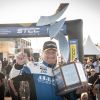
TouringCarTimes caught up with Thomas Lindskog, CEO of STCC, at the autosport fair in Stockholm (Bilsportmässan). Last week news surfaced that the Falkenberg circuit is not going to take part in next years calendar. In view of an expanded schedule for next year, STCC is going from eight races to twelve, this looked like troubling news for STCC.
But Thomas Lindskog shows no worries about a shortage of tracks and explains the strategy for the future.
“When we took over STCC last year we decided to implement a common contractual platform for the circuits,” says Lindskog. “The terms are now the same for everybody. In order for us to make long term deals we want the circuits to go along with an investment plan. This is nothing complicated, just a list with five items we want the tracks to fix during a five year term. In turn, they get a long term deal which would make their economical future more stable.”
The investement plan is of course tailor made for each circuit based on the perception of what needs to be done from the spectators point of view. The list is prioritised, it can concern a new entrance gate, improved toilet facilities or an electronic result screen.
“We want the circuits to invest in things that the public is willing to pay for,” says Lindskog. “There is no intention on our part to push any circuits out of STCC, but with Falkenberg I have no idea why they said no. Nothing has changed since last year. We had an agreement but Falkenberg is run as a non profit organisation (NPO) and their board came to a different conclusion.”
Thomas Lindskog denies that Falkenberg is the start of a trend among the track owners that will leave STCC AB in a difficult situation.
“Other tracks are standing in line to get in,” says Lindskog, referring to Sturup Raceway and, in-moth-balls for the last couple of years, Kinnekulle Ring, and we are also looking into street courses. Some tracks make for a good experience from the drivers point of view, others makes for a good experience from the spectators point of view. Security for drivers and attendants first, of course, but we shouldn’t make it more complicated than it is. If Formula 1 can run races on the streets of Monaco I can see no reason why we couldn’t run on an airfield or on a street course.”
Street races has been a controversial subject in an Sweden. Geographically the tracks in Sweden are located far away from the big cities. There have been talks before about a street race in Stockholm but motorsport is not a sport that will win any elections for a politician.
“We have to work to get the confidence of the politicians,” says Lindskog, and mentions that the more environmental friendly guise of STCC by pushing for ethanol based engines also is a way of gaining that confidence.
The strategy for STCC is clearly expansion and Thomas Lindskog says that, “STCC wants to be a popular sport and we have to expose ourselves more often. I want to see more of STCC and that is a trend that runs through other big sports as well.”
Apart from expansion, Lindskog offers stability – in regulations and race formats – all racing will take place on Sundays and there will be one race run over 40 minutes, including a mandatory pit stop.
“We now know what we have,” says Lindskog, “the foundation is there and everything points in the right direction.”