Analysis: The disqualification of BMW from Japan
The outcome of the 2010 World Touring Car Championship was controversially decided in the courts and not on the track for the first time in the championship’s six year history. We analyse the court’s decision which identifies a communication breakdown at the centre of the issue.
A quick reminder: Yvan Muller had picked up his second WTCC title one week before the final round in Macau, on account of his only rival, BMW’s Andy Priaulx, losing his second place result in race one at the penultimate round at Okayama, Japan and the additional points Chevrolet picked up after his team-mates disqualification as well.
The issue surrounded BMW’s switch to a six-speed sequential gearbox, which at the time looked like a sly move from the Belgian based RBM team, taking advantage of a loophole created by the WTCC created when managing the allocation of penalty ballast across the various models and ages of car throughout the 2010 season.
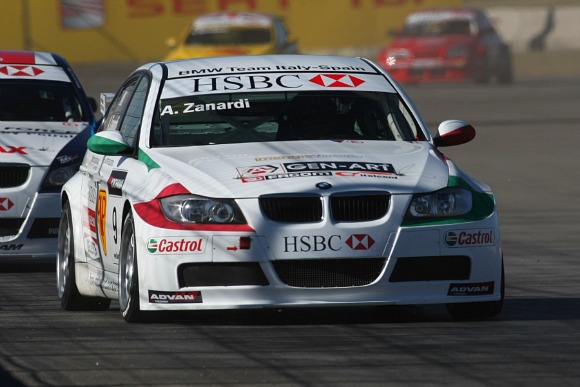
In the FIA S2000 technical regulations, BMW are welcome to run a six-speed sequential gearbox as their competitors do, but would have to take an additional penalty of an increase of 30 kilograms to the cars base weight before performance ballasts are applied. Because of this, BMW have never entered a six-speed sequential car in the World Touring Car Championship, save for the modified car previously raced by Alex Zanardi. This was part of an equalisation measure taking into account Zanardi’s disability, with the Italian racing with prosthetic legs as a result of his disastrous crash at Lausitz in the Champcar World Series back in 2001.
Chevrolet Motorsport Manager Eric Néve was quick to state Chevrolet’s intention to appeal at Japan. On the first day of the weekend, BMW went on to secure a 1-2 in qualifying, taking their first 1-2 of the season, and Priaulx’s first pole since 2006 – showing the car had definitely gained performance, through a combination of either the gearbox or the fact that car was now running 30kg lighter than in previous rounds.
Contrastingly, the races didn’t go well for BMW. In the wet, the rear-wheel drive BMWs struggled in comparison with their front-wheel drive counterparts, and Chevrolet’s Rob Huff took a comfortable win in the tricky conditions in the first race, with Priaulx falling to second place. In race two, Priaulx lost control of his 320si and ended up in the gravel trap, retiring from the race, and just claiming 18 points from the whole weekend.
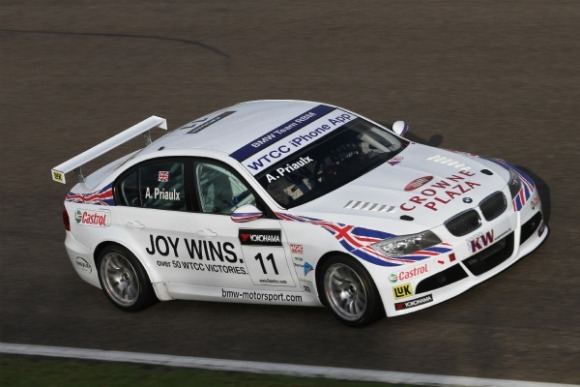
At the FIA International Court of Appeal (ICA) on November 12th, representatives from Chevrolet Europe, SEAT Customer Technologies, Bamboo Engineering & BMW Team RBM attended, along with the National Sporting Authority (ASNs) of the RACB (Belgium) representing RBM, and the MSA (UK) representing Chevrolet & Bamboo, with SEAT not formally represented by an ASN.
The main question was one of documentation, and the eligibility of the sequential gearbox in the BMW 320si.
The principal argument by Chevrolet was that the ‘BMW 320si GBS’ was not a recognised homologation for BMW to use for anyone else other than Zanardi. RBM argued that it was, and that the list of homologated vehicles does not specifically state that the sequential gearbox car was for just for Zanardi. This was the central issue of the appeal, over-riding all others. The only homologation that existed within the WTCC for a six-speed BMW was for the car run by Alex Zanardi by ROAL Motorsport up until the end of 2009. Although sequential gearboxes are run in BMW 320sis in other touring car series running to S2000 regulations, they’ve never been approved by the WTCC.
Homologation of a race car is one of the most important principles of the WTCC. The FIA Touring Car Committee exists to preside over homologation and related technical decisions, with the granting of various waivers and dispensations to ensure equality, fairness as well as to create a competitive series.
Although cars which have not been homologated by the WTCC have competed on occasion, such as the Volvo C30 of Polestar racing, these allowances always come with decisions to ensure fairness to the competitors which do run to the WTCC rules. The Volvo for example has been invisible to the points placings and not factored in the Q2 and top ten grid reversal (Though this will change next year when nationally homologated cars do become eligible).
Chevrolet’s argument, supported by SEAT & Bamboo, was that the waiver was specifically for Zanardi, referencing a recent e-mail from the Touring Car Committee which described it exactly as such. Chevrolet also made reference to West Surrey Racing’s (WSR) failed attempt to run with a sequential gearbox earlier in the season, with the Touring Car Committee ruling that the sequential gearbox homologation solely applies to Alex Zanardi in their response and denial of WSR’s request.
BMW Team RBM’s counters to Chevrolet’s claims, were that the e-mail in question was not a decision by the Touring Car Committee, and was in effect just inaccurate correspondence, and that West Surrey Racing were planning to run an entirely different set of gear and final drive ratios and so this point was not relevant.
In the end, neither of these points had a significant effect on the final decision of the ICA.
One of the main critisms of this ordeal has been the fact that the stewards had allowed BMW Team RBM to run with the sequential box in the first instance, and that the subsequent ruling unfairly punishes the team for what in essence is an error by the WTCC stewards.
The ICA decision identifies that an e-mail was sent by the Chairman of the Stewards, Yves Bacquelaine, to BMW Team RBM in response to a query from the team, appearing to confirm the right for RBM to use the sequential gearbox prior to the meeting in Okayama.
The RACB and RBM argued that the stewards have the supreme authority in enforcing the regulations of the WTCC, and have the right to overturn the technical delegate’s report as well as the Touring Car Committee – and so this e-mail and the subsequent decisions published in Japan allowing the team to run the sequential gearbox were valid authorisations for them to race with the gearbox.
Chevrolet argued that this communication between Yves Bacquelaine and RBM was not an official part of the process. Bamboo also expressed concern for the lack of use of proper channels, with just an informal communication between the stewards and RBM effectively making critical technical decisions with no publication effectively subverting the opportunity for the other teams to protest or appeal them.
SEAT also backed up Chevrolet, supporting the belief that the WTCC stewards do not have the right to authorise non-homologated parts.
RBM’s counter-argument was that it’s entirely valid for a competitor to ask clarification from the stewards.
The ICA ruled that the correspondence between Yves Bacquelaine and RBM was not to be regarded as official, and would not be accepted as a legally recognised communiqué.
The decision of the ICA also recognised that the powers of the stewards also do not extend to being able to over-ride the decisions of the Touring Car Committee in regards to homologation, as that is the express domain of the committee and solely within their jurisdiction.
In regards to the argument surrounding whether the BMW 320si GBS (sequential) was a recognised general homologation, or whether it was implicitly for Zanardi only, the ICA confirmed that RBM’s interpretation of the homologation listing was not correct, and that the homologation document needs to be considered directly. The renewal of the homologation docuementation of the BMW 320si GBS for the 2010 season (although not used) expressly refers to the ‘Zanardi car waiver’, and considered that the intention of the homologation of a six-speed sequential gearbox within the WTCC has only always been specifically for Zanardi.
The ruling of the FIA ICA was to annul the decisions made by the stewards and as a result excluded RBM drivers Augusto Farfus and Andy Priaulx from Japan, which handed the driver’s championship to Chevrolet.
In the end, the decision made little difference to the outcome of the championship winner. Although BMW had to return to a five-speed manual for Okayama, and had to pile the weight back on, a crash in race one for Priaulx and Yvan Muller’s third place would still have secured the Frenchman the title, as Priaulx would have needed two substantial results at Macau to challenge for his fourth WTCC title.
As a result of this whole affair, RBM appear to have suffered through a failure of due process. It’s fairly clear that RBM made the switch to the sequential gearbox to try and take advantage of what was an error in the regulations in regards to the allocation of weight penalties, as well as taking advantage of the waiver which was always intended for Alex Zanardi only.
The weight penalties were a secondary factor however, as the ruling around the illegality of the BMW 320si with a six-speed gearbox superceded any decision around the separate weight ballasts. Although RBM did what it believed they needed to by checking with the stewards prior to running the new gearbox at Japan, the ICA decision demonstrated that the stewards over stepped their authority, but unfortunately the punishment could only fall on RBM, which may have cost them places in the final drivers standings.
How the situation will affect BMW’s plans for 2011, with a question mark still sitting over their entry into next season remains to be seen.