
History of hired guns in the BTCC finale
Motorbase Performance have gone all out in bringing in double champion James Thompson to help Mat Jackson fight for the Championship at Silverstone this weekend. Recent events in Sweden show bringing in the right drivers can really help your Championship bid.
The trend of bringing in a ‘ringer’ driver to help a driver’s Championship bid is not an old one, though it hasn’t been notoriously successful in the British Touring Car Championship in recent years.
One of the reasons it hasn’t is there is a built in safety measure to render late entries uncompetitive in the form of a weight penalty for late entrants of 45kg – equivalent to the weight the championship leader has to take into the race, but in the case of the new driver, he (or she) has to carry that ballast all weekend. This can be applied at Championship Administrator’s Alan Gow’s discretion, though in the case of Thompson it’s a bit of a grey area as he’s taking over a car which has already run the extra weight penalty back at Rockingham, when Motorbase introduced the third Ford Focus ST for Michael Caine. It’s already been confirmed that Thompson will have to carry that 45kg this weekend as a handicap at Silverstone.
In the current era of the BTCC, additional drivers at the end of the season have had varying impact. From 2001-2004, in Vauxhall’s dominant period, there was no need for extra drivers as the battle was within the team, whether it was between Yvan Muller and Jason Plato, or Yvan Muller and James Thompson.
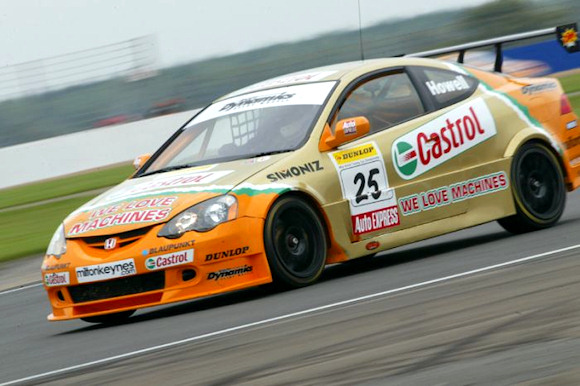
In 2005, Team Dynamics was the first to rope in an additional driver to aid their Championship bid, by running a newly built Honda Integra Type-R for Gareth Howell alongside Matt Neal and Dan Eaves. This was in order to keep Vauxhall/Triple Eight’s Yvan Muller at bay and secure the first Championship victory for an independent driver for Matt Neal. The result was Neal won the Championship, though arguably it was down to the Integra itself which was a far stronger car than Vauxhall’s new Astra Sport Hatch.
The following year, Dynamics did the same again, adding a third car in the later rounds for Howell, this time to stave off the threat from Jason Plato in the new SEAT León.
In 2007, a close battle between Jason Plato for SEAT and Fabrizio Giovanardi at Vauxhall saw both teams recruit additional drivers to help at the season finale at Thruxton. Giovanardi’s friend and two-time British Touring Car Champion Alain Menu was brought in at Vauxhall, whilst WTCC Independents’ Trophy Champion Tom Coronel was drafted in at SEAT, though neither played a big part in the final race weekend, with Giovanardi and Plato’s battle continuing without interference from either teams’ new recruits.
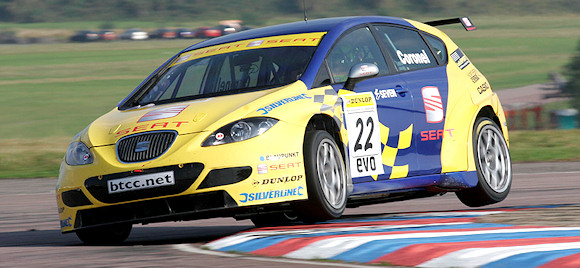
In 2009, West Surrey Racing were also on the verge of their first Championship success with Colin Turkington, and so they felt the need to bring in their former driver Anthony Reid in a third BMW 320si to help ensure that victory. In an odd twist, bringing in Reid did appear to have an effect, though Reid’s results weren’t anything to write about, the team’s second driver, Stephen Jelley, perhaps disheartened after two years playing second fiddle alongside Turkington, suddenly found renewed pace within the team, and was a consistent front-runner in the final few meetings.Turkington went on to take the Championship in one of the all time greatest finale’s at Brands Hatch ahead of RML’s Jason Plato & Vauxhall’s Fabrizio Giovanardi.
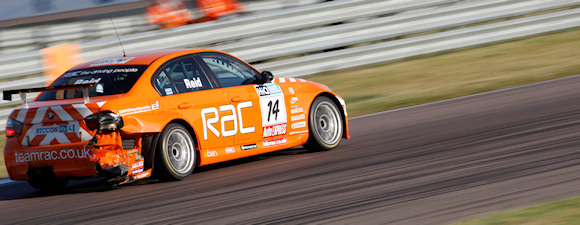
Outside of the BTCC in Scandinavia, this year’s Championship was decided with key involvement by additional drivers for Team Biogas (Volkswagen) and Chevrolet Motorsport Sweden, with Rickard Rydell securing the first title for Chevrolet, subject to appeal.
Volkswagen had already stepped up its challenge at Falkenberg, adding a third Volkswagen Scirocco for Carrera Cup Scandinavia driver Johan Krisoffersson. At the penultimate round of the season, Chevrolet followed suit, adding a third Cruze for FIA WTCC driver Michel Nykjaer, who had driven for Chevrolet earlier in the FIA European Touring Car Cup. Nykjaer was vital support for Rydell, as the team’s regular driver Viktor Hallrup was still a developing driver and not a regular top ten runner.
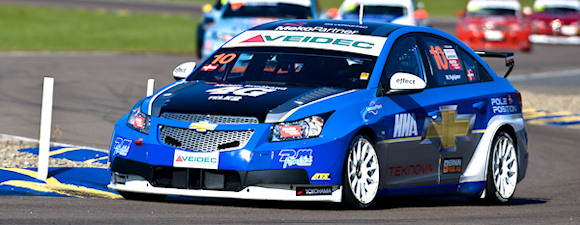
For the season finale, Volkswagen went one further, adding a fourth Scirocco for former Champion Thed Björk. It’s an exceptional circumstance for team to have two spare cars available, but Team Biogas had these as they were their old non-S2000 cars, formerly raced at the Nurburgring 24 Hours before the team had built new cars for drivers Fredrik Ekblom and Patrik Olsson.
Björk sacrificed an almost certain race victory in the final round of the season, dropping three places down the order letting the non-championship contending cars of Mattias Andersson and Robert Dahlgren through, and fell behind team-mate Ekblom to put him in a Championship winning position, that was until controversially Rydell was able to pass a slowing Björk as the safety car was deployed later in the race, which is presently under appeal and if successful will see the Championship handed over to Ekblom.
Rydell had already been able to close in on Ekblom thanks to help from Chevrolet team-mate Michel Nykjaer, who had held the other Volkswagen of Patrik Olsson back in the early stages. Nykjaer and Björk’s actions at the STCC finale at Mantorp Park show how useful it is to have team-mate at the front, with no Championship agenda of their own in those final races of season – though quite vitally, in the STCC there is no late entry ballast for additional drivers as there is in the BTCC and the World Touring Car Championship.
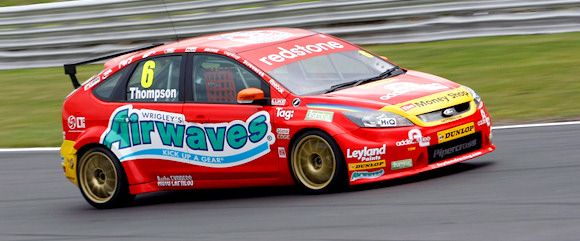
With James Thompson being the only new driver for the front-running teams added to the line-up in the BTCC this weekend, the question is have any of the other teams missed a trick by not doing the same? Although the biggest limitation for everyone is certainly budget.
Triple Eight, probably the most threatened by Motorbase’s move have limited options given their low key approach to the Championship in the last two years. They only have the two Vauxhall Vectras, so their only option would have been to return the sponsorship money from Ollie Jackson and pay for another driver to race the second car if they wanted to recruit an experienced BTCC driver like Thompson.
Honda are in the enviable but also tricky position of having both drivers in contention for the title. A third car’s sole purpose would be to run interference between Honda and Chevrolet’s Jason Plato, and would need to keep out of the way of the fight between Matt Neal and Gordon Shedden. Critically, this time Team Dynamics don’t have any additional cars to run as they did in 2005-2006, with their previous Civics having been shipped off to Taiwan at the beginning of the year.
Chevrolet, and particularly Jason Plato, have long been indicating that their car will not be competitive at Silverstone in any case due to their power disadvantage to the turbo cars. If they truly believe that, they’re unlikely to believe adding any additional cars which will also be hit with an additional 45kg of ballast would be much help in any case. Chevrolet do have the cars though, and could call on any of the three Cruzes which were recently raced in Sweden, and any of their high calibre international driver squad, though with Yvan Muller, Rob Huff, Alain Menu and Michel Nykjaer soon on their way to Japan for next weekend, the most sensible name would have been Rickard Rydell, who hasn’t raced in the BTCC in 11 years
We’ll see this weekend whether 2002 and 2004 Champion James Thompson does much to shape the result of the 2011 British Touring Car Championship.


